

This newsletter is the second part of a series called Letters to a Distant Future, in which my friend Angeli and I exchange letters about life, revolution, hope, and other things. If you missed the first pair of letters, find them here.

Dear Angeli,
I admit that when I think about Palestine, Venezuela, and most recently, Iran, my immediate feeling is one of avoidance and dissociation. It is a measure of coping, as you said, that shouldn’t be necessary but is.
I’m reminded by a Palestinian refugee I met online, B, who I’ve been sending financial aid to. He has escaped to Egypt, but he is still not completely safe, struggling to afford rent and food without a job and without knowing anyone in his new home. I felt most anguished talking to him; it is unspeakably difficult to have no family, to ache for a homeland you might never see again.
I suppose my answer to your question is this: I place one foot in front of the other by engaging with a few people at a time, people who I know I can help. I invest my care in them. I asked B about his family, and he asked me where I’m from; this human exchange is healing, I imagine for both of us, in a way that sending money over PayPal doesn’t quite achieve.
To engage in the practice that asks of us what we owe to each other is maybe the highest form of spirituality. I admire that in you, that you do this even when you’re struggling. But Angeli, I hope you know that you don’t owe anyone your life. Your life is yours alone. To feel that life is out of one’s control leads to thinking about not living. To feel this lack of control persistently over years is a unique form of trauma, a phenomenologically heavy burden.
Relating this to your yearning for a creative life, writing is a form of regaining control over our lives through narrative. With each word, we rebuild our numerous pains into a kind of sanctuary for ourselves and others.
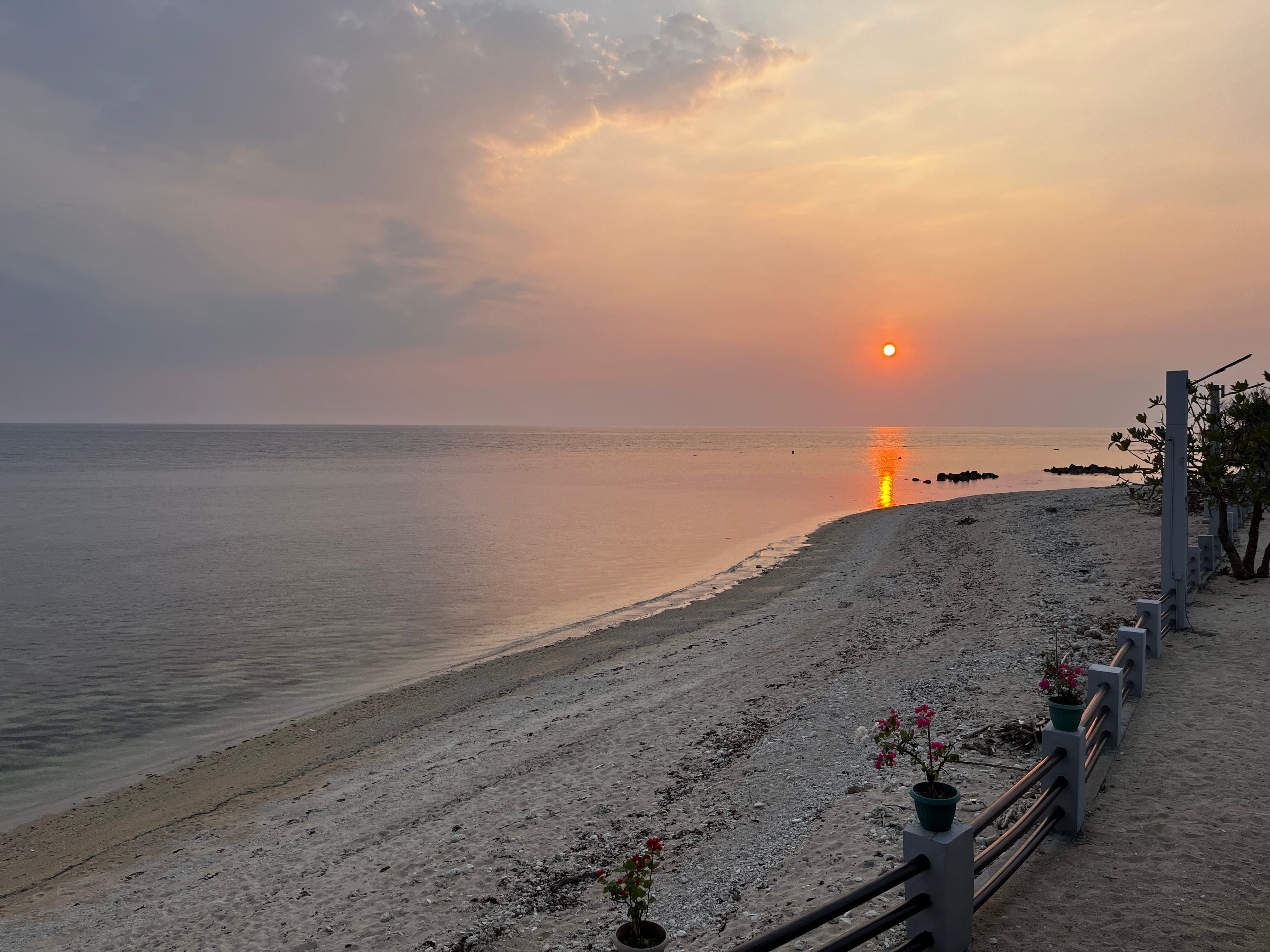
Narrative, making sense of a traumatic experience through words, moves that pain from the emotional center of our brains to the cognitive center and gives us permission to release the pain trapped in our bodies.
I’ve been devoting my time to further self-study around trauma psychology. In reading books about fragmentation of the self and how to piece these fragments together into a whole, I’ve come to a greater appreciation of this truth that I’ve felt intuitively before: Narrative, making sense of a traumatic experience through words, moves that pain from the emotional center of our brains to the cognitive center and gives us permission to release the pain trapped in our bodies. We can become aware of our pain in a way that’s not abstract but felt. We realize we have the freedom to let it go.
Writing is crucial medicine. It’s certainly not a straightforward or painless process, but it’s why we devote ourselves to the craft: we find deeper truths through narrative that free us from deeper pains each time. So, I hope through the busyness of your Master’s degree that you find the time and space to write. It’s one of your medicines, and it’s medicine for others too (just as your book Unbecoming was for me).
About books—I’ve sent my poetry manuscript to another publisher this month, and I feel sort of like how a mountaineer feels after reaching the summit and admiring the vista but feeling the immense need to take a shit. I’ve created something I’m proud of—something that should be sent galloping into the world—but I need to wait months, maybe even a year, before it can be published. And I don’t even know if it will be read. I find this part of the writing process tedious, underwhelming, insufferable. I am trying to be patient with it, but the longer I wait, the more I wonder if it’s even good.
I have a lot to learn and untangle about my need to feel seen in my writing. Did you struggle with this in the process of publishing your book? How have you come to be satisfied with your work as a kind of living thing that’s no longer in your control? I can’t wait to hear from you again.
Love always,
Maria
written March 7th, 2026.
Dear Maria,
I understand what you mean when you say you place one foot in front of another by investing your care in people you can help. In the past few months, I’ve also been talking to A, a Palestinian still living among the devastation in Gaza. She runs a small and mobile primary school in Gaza, seeking to teach children the basics of literary and numeracy and in doing so prepare them for a better future than the present deprivation they live in. I wish, always, that I could do more for them. I hope, with my entire being, that your friend B is alright, that he will find a life of safety and dignity in Egypt. These past two years of genocide, I have wished for nothing else but the safety and liberation of our fellow sisters and brothers in Palestine, in Sudan, in Venezuela, in Iran. I wish we ourselves could bend the moral arc of this universe towards justice, but I take comfort in the fact that we are not alone in our anger and grief; we are not alone in this protracted struggle for a better world.
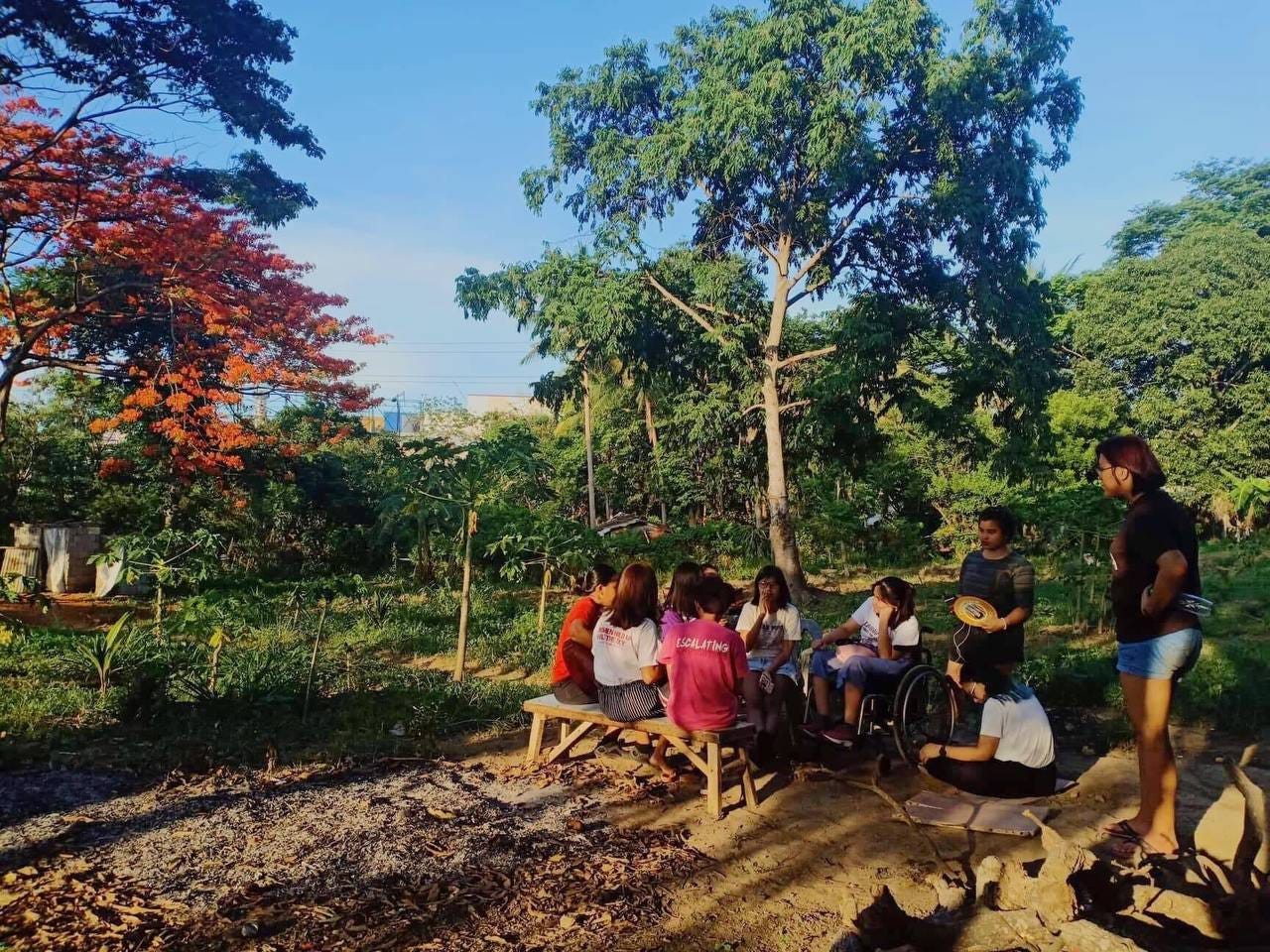
Regarding what you said, I do feel quite keenly that I owe my life to things and people outside of myself. I think, on one hand, that to contemplate what we owe each other is a necessary practice in a world absorbed by delusions of independence and isolation. On the other, you are quite right that to feel as if your life is outside of your control is a slippery slope to not wanting to live at all. I suppose there must be some middle ground to this, some kind of balance where we can acknowledge the ties that bind us to each other while allowing ourselves to steer our own ship, but I can’t quite find it. I feel a keen sense of indebtedness to others. Sometimes, I feel like my life is not my own to live.
I wish we ourselves could bend the moral arc of this universe towards justice, but I take comfort in the fact that we are not alone in our anger and grief; we are not alone in this protracted struggle for a better world.
I find your foray into trauma psychology and the power of narrative to be quite a fascinating journey. From past experience, I find that what you say is true, that the process of articulating an experience moves us from the emotional realm to the cognitive one, and in doing so allows us to release what is tangled in and fraught with emotion. Writing is a kind of therapy, and I must admit I prefer framing it as a process of transforming the self, of allowing ourselves to be changed through articulating that which grieves us. We can let it go, as you say. We can let go of the pain.
I hope you too never stop writing, Maria. Your writing is a gift to me, as it is to others. I am incredibly proud of you for completing and sending your poetry manuscript to publishers, and I have to agree that this is one of the more underwhelming parts of writing: that long, protracted stretch between submission and acceptance, between completing a manuscript and looking for its place in the world. I hope for patience for you, as I always believe that what is meant for us will find us, and I hope you know I believe fully in your manuscript, in its sense of wonder and curiosity, and I have no doubt it will find its place in the world. I believe this enough for the both of us.
I admit that when it came to publishing my book, I was not so nervous about its reception, or how people would view me afterwards. I don’t mean this to say I was confident it would be received positively. I keenly remember the simple, joyous excitement of writing—of wrestling with words and narrative—and that childlike wonder sustained me throughout the entire journey of writing and editing. At the precipice of publication, I found I had no choice but to make my peace with it; I had to let it go, as one would let go of a child that is grown, and in many ways the book doesn’t feel like my own anymore. I mean that in the best way: the book simply exists as it exists. It is read how it is read. Whatever journey it is on is its own, and I am happy to simply see it exist in the world as it is. A process of detachment, almost; a process of letting go of what we care about, trusting the world will meet it with care.
As I write this, I am almost certain that I failed my final exam. What I am learning most from this program is how to meet failure with grace, how to treat myself kindly and to understand that, no matter how many times I meet the steep learning curve with failure, I can simply try again.
Perhaps, in school as in life, that is all we can do: attempt again and again, knowing we do not traverse this path alone.
I miss you always, dear friend.
With love,
Angeli
Written April 5th, 2026.
