

Misunderstood "Small t" Trauma
The wound appears as just a scratch, but it’s persistent and won’t seem to heal.
As a mental health counselor, I was taught about big T trauma and small t trauma. Let’s call it Lion-trauma and Rat-trauma.
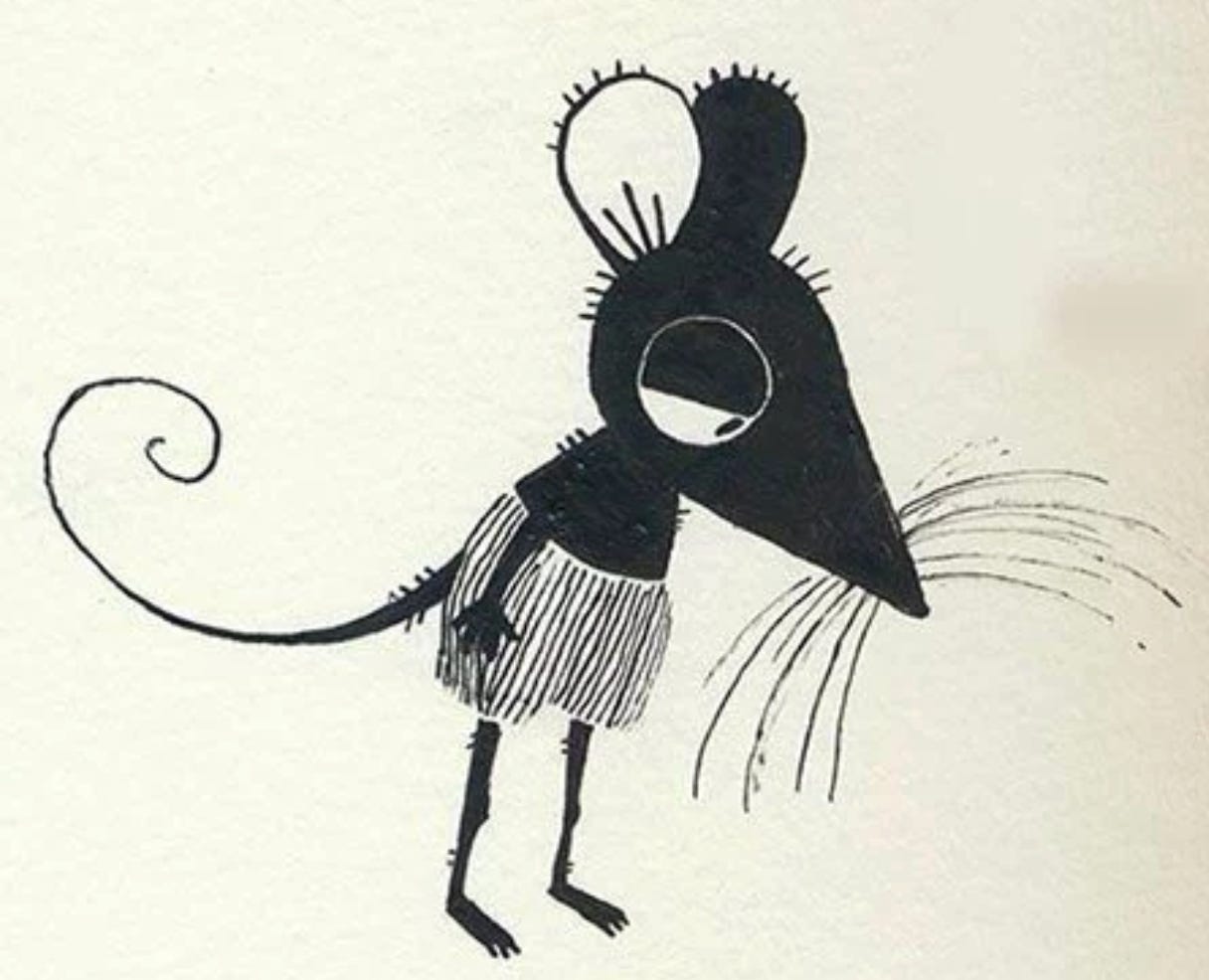
Lion-trauma is what we typically expect of the word. The event itself and the resulting pain is big and visible. It probably left a gnarly wound. Rat-trauma is the opposite. It’s small and invisible. The wound appears as just a scratch, but it’s persistent and won’t seem to heal.
Rat-trauma is more common in people who come to therapy. It’s also the most misunderstood. Because it appears invisible to the untrained eye, a person struggling with small-t trauma is struggling with both the pain of the traumatic event and the minimization of their pain from people who don’t believe them.
A traumatic experience like parental emotional neglect may seem small in the long list of things that could go wrong in someone’s life, but when put into perspective as pain that occurred every day over years from childhood to adulthood, we can begin to grasp how such a wound can last for decades after the fact.
When a traumatic event exceeds a person’s ability to cope, it gets encoded in the body as emotional memory. The body does this to help protect a person against the same stressor by responding with fear and adrenaline, but over time as the traumatic event causes disproportionate emotional responses to normal life stimuli, it can get in the way of a normal and happy life. This is when most people come to therapy; they understand they have to heal if they want to progress in life.
Trauma’s lasting impact on a person’s mind and body is dependent on many things: family dynamics, cultural context, support systems, and other factors. What is experienced as normal for one person may be traumatic for another person, which is something we need to accept without assigning moral value. Someone is not necessarily “strong” for keeping their pain to themselves because—and this happens more often than we know—that emotional pain may worsen into a chronic illness down the line, as Dr. Gabor Maté writes in When the Body Says No.
Emotional neglect can be a form of trauma. Sexual abuse can be a form of trauma. Living in poverty can be a form of trauma. And yes, witnessing a genocide every day on our phones can be a form of trauma.
If someone talks about processing their trauma in therapy, that’s not permission for you to ask what it is. That’s not a free pass for you to test whether their trauma is valid in your eyes. It’s an invitation for you to listen to someone’s humanity and ask yourself: Have you been hiding your pain? Is it time to face it with compassion and curiosity?
Because each person experiences trauma in their own unique way, counselors, good friends, and good comrades should remain curious and compassionate. “Making space” for the emotional pain experienced by the people we are building a better world with shows us that just like healing is possible, a better world is possible too.