

Compassion for myself? Please.
How to meet our past selves with curiosity
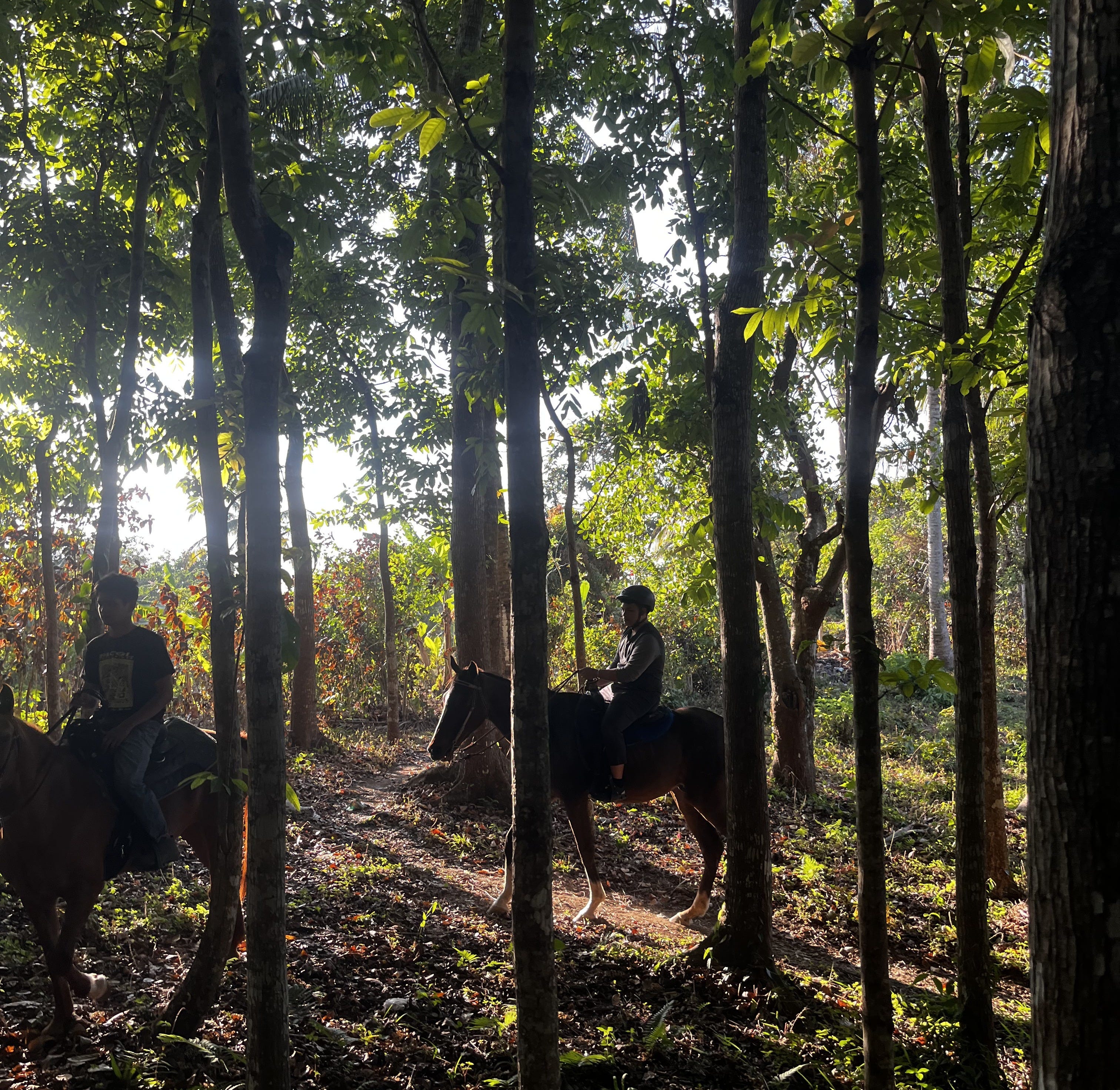
I don’t know about you, but this season for me has constructed a mosaic of grief and glimmering hope. If you could see the inside of my journal, you’d see me in my absolute happiest moments: cheesing behind a cake on fire with 25 candles, riding a golden-brown horse named Marly in a sun-dappled field, and—you heard it here first, not Facebook!—getting engaged to my best friend Ethan.
My heart is so full, and I’m immensely grateful for all the joy I get to experience. At the same time, the higher powers have seen fit to make me confront my trauma-related patterns. Frightening, I know. It seems I’m being asked to really truly take care of all my past selves who’ve been hurt, neglected, and abandoned—which would be fine if they didn’t get in the way of so much??? I’m only kidding (partly).
The thing about trauma is that it warps reality so that we stop seeing ourselves as important. Instead, we project our sense of self onto lovers or friends, our careers, or some other thing that never asked to be a substitute for something as important or sacred as a self.
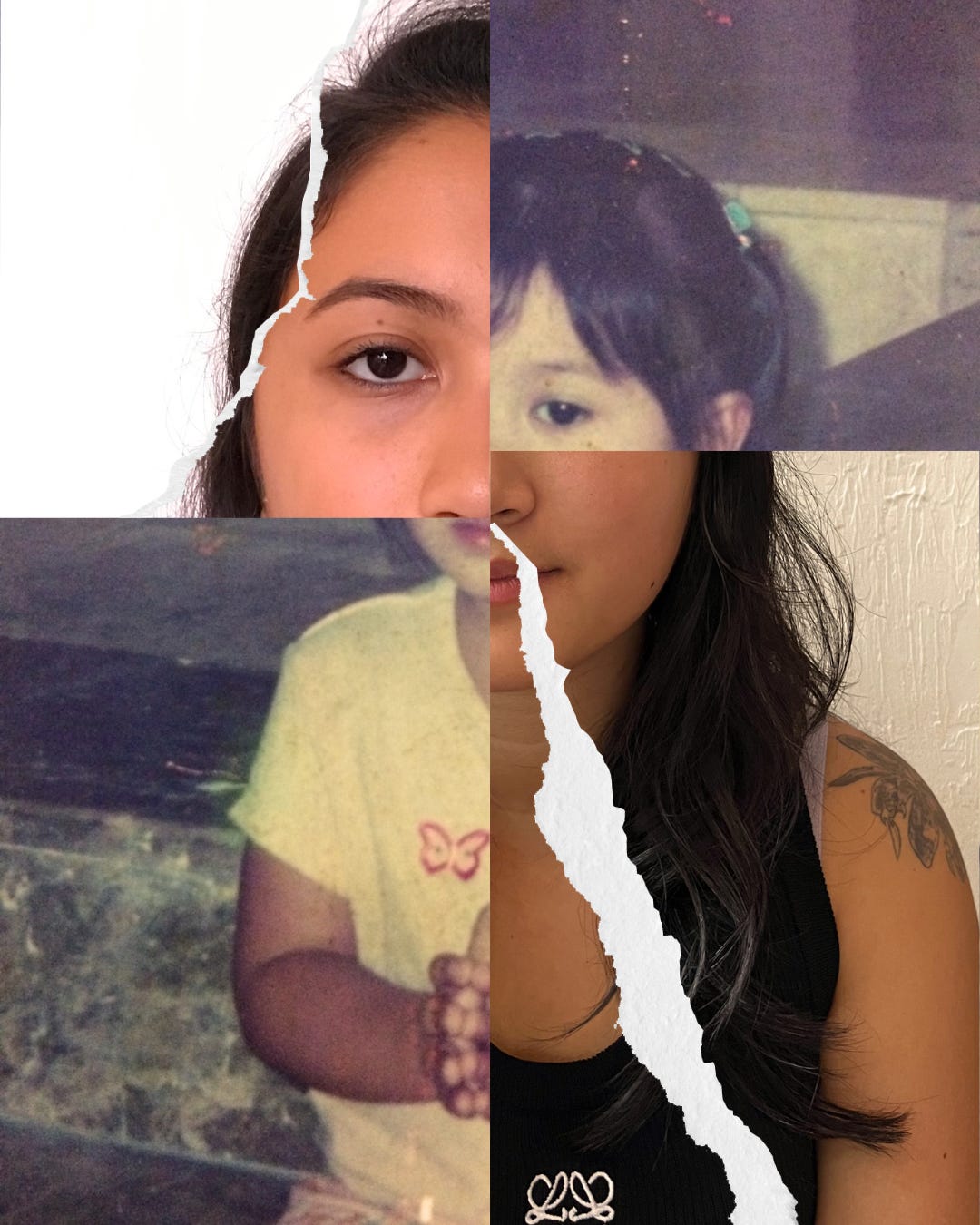
We do this because we believe it’s easier to love the other. We think they’re more talented. They require less maintenance. They’re more deserving of our love. Meanwhile, the little kid version of our self is sitting in the corner of our mind, watching and waiting for someone to take care of them.
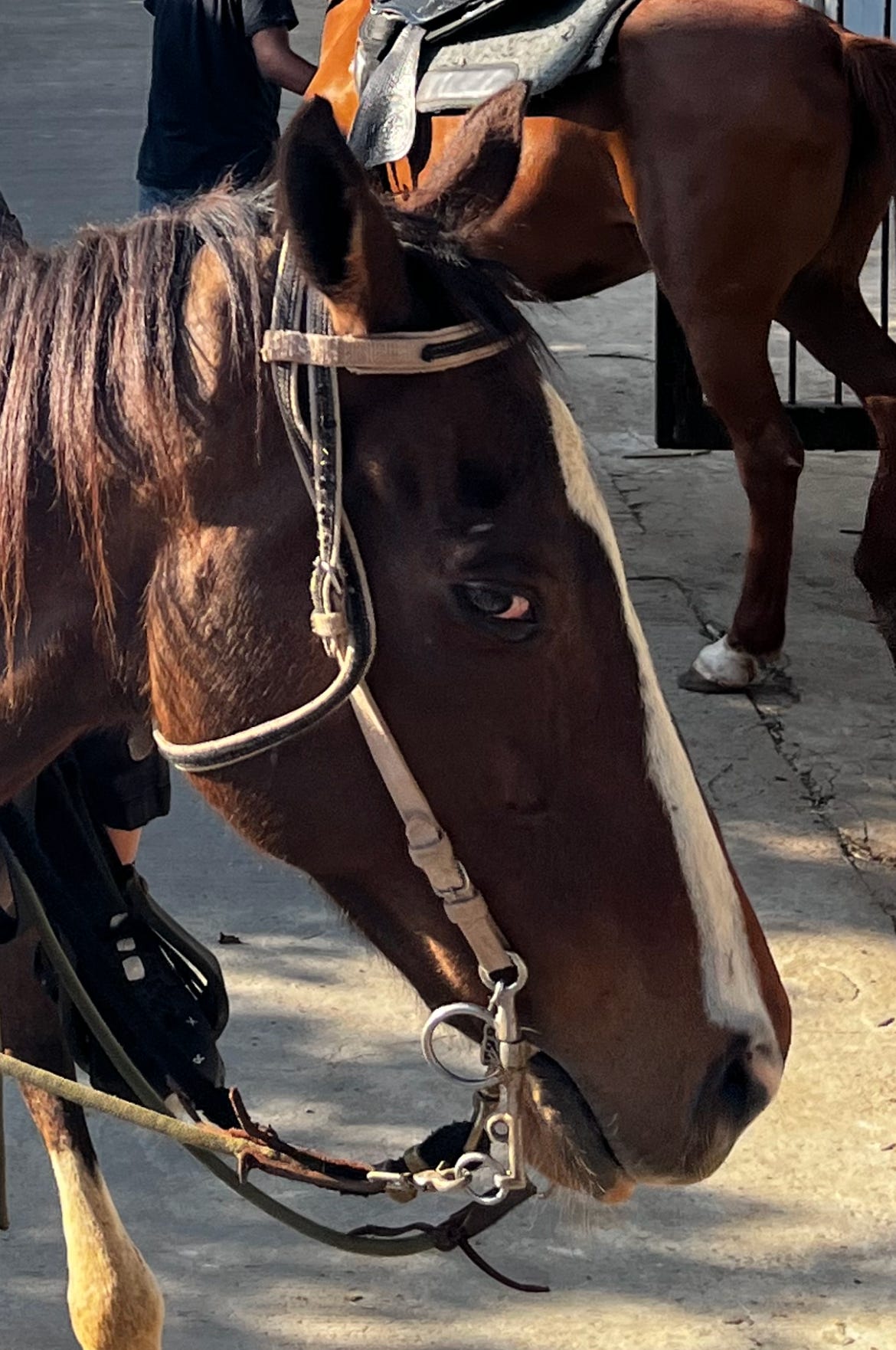
Why is it easier to have compassion for an animal than a little kid from your past? If a golden-brown horse named Marly walked up to me and neighed his sadness, I would pay to be able to hold him, comfort him.
If my younger self did that I’d say not now.
Janina Fisher, a psychologist from the Sensorimotor Psychotherapy Institute, writes about self-fragmentation as an act of disowning traumatic experiences in order to move on with normal life. It’s casting aside the hurt, younger self out of fear of being consumed by their feelings. When we keep trying to avoid blending with our past hurt, however, that same hurt forces us to pay attention through intrusive images, thoughts, and visceral sensations. In a sense, flashbacks.
It’s logically better to meet our past hurts from a place of curiosity than to be bowled over by feelings of shame when we least expect it. But more than knowing this, how can we want to meet our past hurts? How can we make it a—if not enjoyable—neutral practice?
Visualizing an outcome is always helpful. “I want to meet my past hurts so I can show up with calmness and confidence in my life.”
Some practical advice from Fisher comes in a neat 5-step guide:1
Notice what the younger you is feeling and externalize it. Say, “She is afraid.”
Notice a present physical sensation. Your hands on the table, your stomach rising with each breath. Anchor yourself here in the present.
Notice how you can feel both the physical sensation of the present and the emotion coming from the past, with neither one consuming you completely.
Offer comfort or wisdom from your self that’s calm, confident, and attuned. "Don’t worry. I’m here.”
What does it feel like for your hurt self to feel your sincerity? Did that help them or could they be needing something else?
For some of us, these steps sound contrived and just a touch insane (So I’m supposed to lean into my voices now?) But we are also the ones who’ve rarely had a compassionate adult listen to us in this way, and we are only scared that it’s not sincere.
It will feel foreign and strange at first, but this is The Work—ta da!
Janina Fisher (2017) Healing the Fragmented Selves of Trauma Survivors: Overcoming Internal Self-Alienation. Chapter 5: Befriending our Parts, Sowing the Seeds of Compassion.
i love this! i feel like it is often during the most stable and peaceful times of our lives that we are forced to confront the demons of our past—mainly because the present challenges the beliefs shaped by past trauma. i remember that younger me would always tell myself, "i don't want to grow up like that [adult]", so it makes sense that i should be more compassionate to myself, given that all this time i wanted to grow into a person that would've been a safe space for the younger versions of me.